“Aquanatal exercise provides a unique combination of buoyancy and resistance, making it an ideal form of exercise for expectant mothers."
"It helps to alleviate common pregnancy discomforts, supports cardiovascular health, and promotes overall well-being.”
(Baines and Murphy, 2010; Johnson 2016)
Why use water-based exercise during pregnancy
Swimming and exercising in water are good ways to stay physically active during pregnancy. As your bump grows, the feeling of weightlessness in the water should be relaxing and allow you to move around more comfortably. If you were used to swimming before pregnancy, it is safe to continue as there is no evidence that chemicals used in pools cause any harm. If you have not done much swimming before, start off slowly and build up gradually.
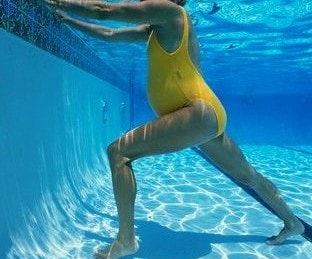
Being physically active during pregnancy has lots of benefits to your body and mind.
In addition to these, swimming puts less pressure on your joints as the water supports your weight. It is also a good way of keeping active if you have back pain or pelvic girdle pain sometimes known as symphasis pubis dysfunction(PGD/SPD).
Do consider your stroke when swimming, as breaststroke can be painful if there is any pelvic gridle discomfort. Use a stroke which is comfortable for you and swim at a time when the pool is not overcrowded.
The Benefits of Aquanatal Exercise
1. Feel lighter and move freely
The buoyancy of water creates an experience of weightlessness, especially in deep water.
This can make aqua exercise easier and more relaxing for pregnant women, particularly if they are experimenting joint or pelvic pain that up to 8-in-10 women experience during pregnancy.
2. Breathe deeply and experience reduced swelling
Exercising in water encourages deeper and fuller breathing and increases oxygen up-take for both mother and baby due to water’s hydrostatic pressure on the rib cage.
You are also likely to experience reduced swelling in your feet and ankles, as well as a lower heart rate than during exercise on land, as hydrostatic pressure increases blood flow back to the heart.
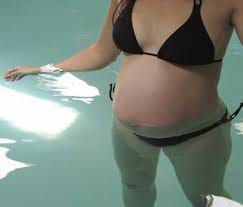
3. Exercise safely and for longer
Unlike other forms of exercise on land, aqua exercise is low impact and is less likely to lead to sore muscles after your session.
However, low impact doesn’t mean low intensity, and as water provides around 12 times greater resistance than air, you can exercise as intensely in water as you would out of it.
You can also exercise for longer and more frequently than on land, without injuring yourself, due to the supporting effect of water’s buoyancy.
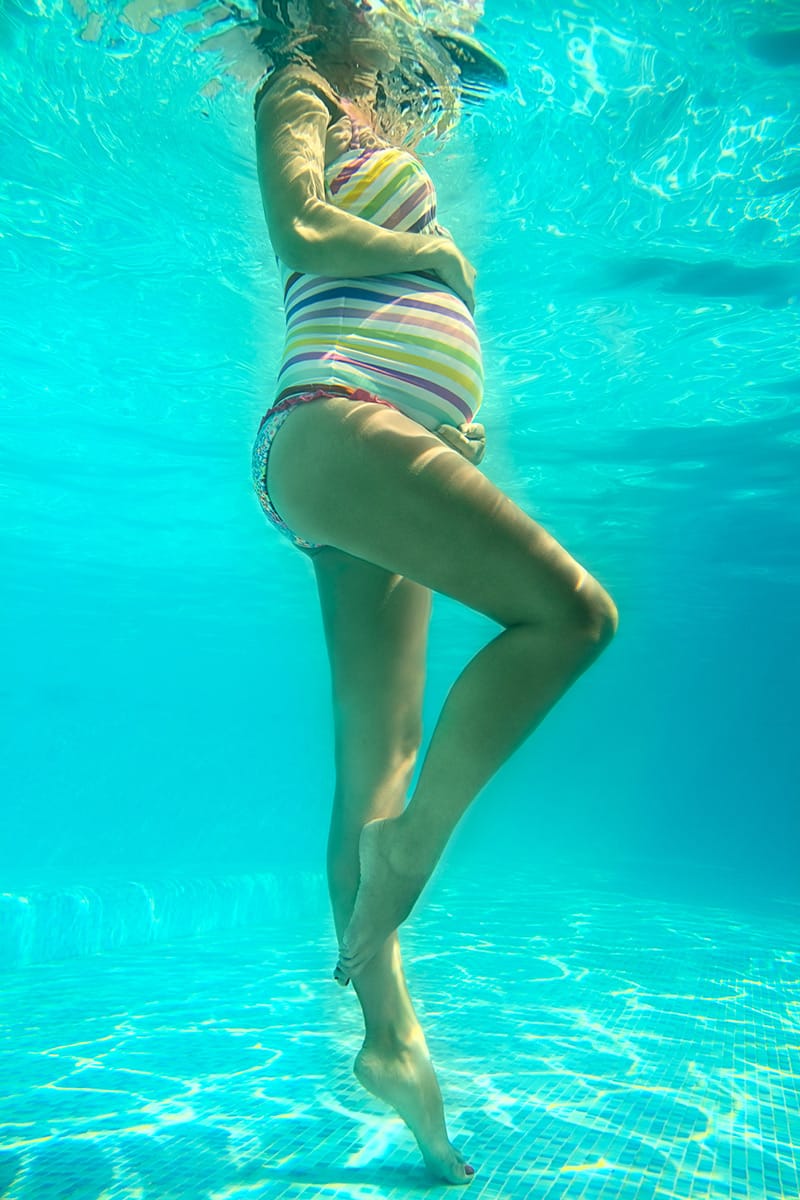
4. Improve your posture and promotes better sleep
After an aqua exercise session, you may have more energy and sleep better, as the water-based exercise should be relaxing, relieve stress and give a sense of wellbeing. Aquatic exercise has also been seen to improve pregnancy posture and reduce lower back pain.
5. Meet other women who are pregnant or in the first weeks after birth
Group exercise classes offer ideal places to socialise and network with pregnant and new mothers in a community setting.
What to expect at an Aquanatal Class
An aquanatal exercise class is made up of the following components:
Posture check, possibly before entering the pool, with tips on maintaining it correctly in the water; continue with posture checks throughout the class
Warm-up in the water
Aerobic exercises
Breathing awareness
Strengthening and endurance of relevant muscle-groups
Co-ordination activities
Stretch. Stretches should involve all muscle groups used throughout the class elements
Relaxation (optional) - if the participants are warm enough in the water, this can be an enjoyable way to end the class
Posture check on transferring from water to dry land
Pelvic-floor muscle exercises - these can be taught in the water, but if not, then an ideal alternative time is during the coffee break, which also provides an opportunity for the women to talk, either to each other or with the instructor, about any problems they may have.
(from POGP, 2021)
The Importance of Peer Support
Aquanatal classes are an ideal community environment for mums-to-be to meet and connect with others on their own journey to motherhood. The opportunity to network with peers outside work or family is often limited, so a weekly class offers so much more by way of questions, answers and support for the highs and lows that childbearing brings. Small queries can open conversations and build relationships between women that often then develop to become lifelong friendships regardless of career or family situations.
The 'chatter' and exercise offer a unique combination of physical activity and information which strengthens muscles, as well as providing comment on a range of pregnancy, parenting and lifestyle adaptions that are vital to the emotional health and wellbeing of pregnant women. Midwife-led classes can ensure women have questions answered about health and pregnancy concerns whilst undertaking effective activity that can prepare them for labour, birth and beyond.
Aquatic Exercise Association (AEA), 2025. Aquatic Fitness Professionals Manual. 8th ed. Champaign, Illinois: Human Kinetics.
Baines, S., and Murphy, S., 2010. Aquatic Exercise for Pregnancy: A Resource Book for Midwives and Health and Fitness Professionals. Keswick: M and K.
Bolitho, S., and Hatch, V., 2014. The Complete Guide to Aqua Exercise for Pregnancy and Postnatal Health. London: Bloomsbury.
Davey, E., 2019. An exploration of women’s experiences of wellbeing and peer support during pregnancy, through attendance at midwife-led aquanatal exercise classes. Doctoral Thesis (Doctoral). Bournemouth University. Available from: https://eprints.bournemouth.ac.uk/32630/
Lawrence, D., 2004. The Complete Guide to Exercise to Music. 2nd ed. London: A&C Black.
Lawrence, D., 2004. The Complete Guide to Exercise in Water. 2nd ed. London: A&C Black.
Patter of Tiny Feet
© 2026 Systeme.io